In this article
Brazil's new education guidelines draw a line between a teacher using AI to prepare classroom materials and a child using the system directly. The National Education Council's Resolution CNE/CP No. 1 took effect on November 12, 2026, when it appeared in the federal official gazette. It covers public and private education and gives institutions 12 months to bring existing policies, practices, governance arrangements and contracts into line. The prohibitions in Article 41 apply immediately. Official resolution and annexes
The Ministry approved the council's opinion before the rules took effect
The National Education Council, known as the CNE, develops national education guidelines. Its formal opinion sets out the council's reasoning and proposal. On November 10, Brazil's Ministry of Education, known as the MEC, ratified Opinion CNE/CP No. 15/2026. The resolution sets out the guidelines that education systems and institutions must apply.
The 12-month transition began on November 12, when the resolution was published and took effect. Schools can revise their contracts during that period. Any feature prohibited by Article 41 has been subject to the ban since publication. Articles 46 and 47
The rules change as students move through school
In early childhood education, Article 21 bars children from using AI systems, including in activities mediated by a professional. Educators may use AI for planning and educational administration. The resolution also permits accessibility resources for removing barriers, subject to limits on sensitive inference, individual profiling and effects on decisions about children.
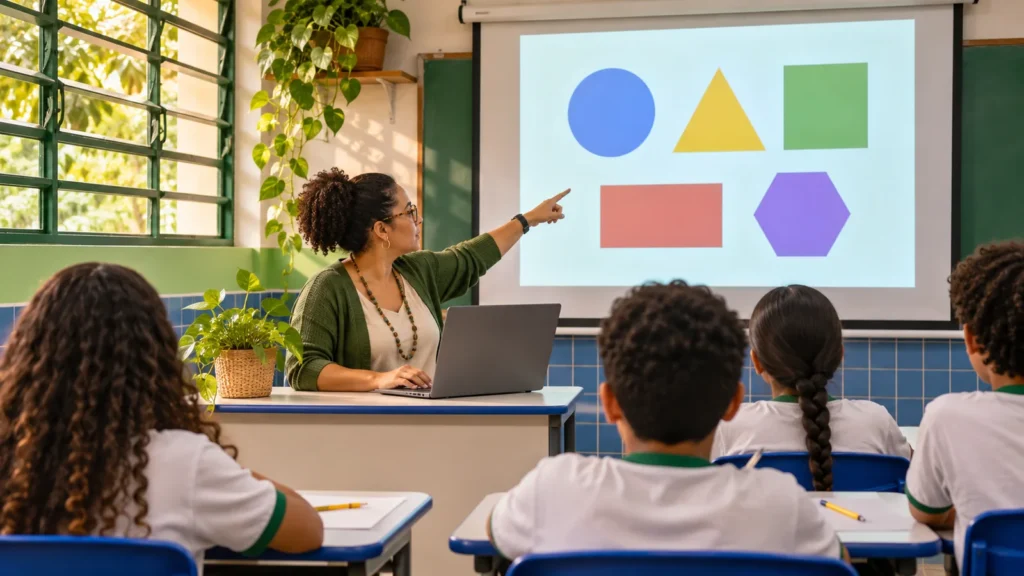
Brazil's nine-year fundamental education stage is divided into grades 1 to 5 and grades 6 to 9. In grades 1 to 5, Article 22 allows professionals to plan and lead activities that use AI resources. A teacher can review generated material and discuss it with the class. Students may not interact with generative or conversational systems, even under supervision. The article makes a separate provision for assistive technologies and accessibility resources under the conditions set out in the resolution. When institutional use involves students in those grades, schools must explain the educational purpose to families and protect personal data.
For grades 6 to 9, Article 23 allows generative AI only in educational activities mediated by education professionals. It bars direct, autonomous, individual or unsupervised use by students. Upper secondary education follows the general basic education rules, which call for a progressive and mediated introduction where use is allowed. Activities should fit the students' stage of development, the curriculum and the school's capabilities. Article 24 prohibits AI use for targeted advertising, marketing profiles or commercial exploitation of student data at every stage of basic education.
Universities have to set their own policies
Article 25 allows universities to teach AI as a subject and to use it in teaching, research and community engagement. Article 27 requires institutions to establish policies covering academic integrity, authorship, transparency, intellectual responsibility and the protection of rights. A course might allow students to critique model outputs in one assignment while requiring independent writing in another. The policy should make clear which rule applies and how students can disclose their use.
Under Article 28, researchers must disclose AI use when it makes a relevant contribution, such as to writing, data analysis or programming. The people responsible for the research still have to verify the results and stand behind the work. Teacher education programs also have to cover digital literacy, educational uses of new technology, critical analysis of education data and ethics. The resolution encourages institutions to connect that training to supervised placements where possible.
A tool's risk depends on how the institution uses it
Articles 37 to 41 and the guide in Annex II distinguish four levels. Preparing material for teacher review can be low risk when the activity does not use sensitive data or materially affect students' rights. A system that interacts with students regularly or makes recommendations for learning activities may be moderate risk if it has no automatic effect on grades, progression or other sensitive decisions. Institutions should examine the actual data, purpose and level of supervision for each use.
High-risk applications can influence significant decisions about educational opportunities. For example, software that flags students for additional support can affect access if the school uses its recommendations to allocate places. Article 40 requires effective human oversight and safeguards that include documented decisions and a route for review. The fourth level covers applications whose risks are excessive or incompatible with education. Social scoring is one example of prohibited use. If a supplier adds a new feature or changes how it processes data, the institution has to reconsider the risk in that context.
Grades and discipline still require human judgment
Article 41 prohibits solely automated decisions with significant consequences for a student, including retention, selection and disciplinary sanctions. It also bars AI from grading essays or other work that requires interpretive judgment on its own, or without the human correction specified in Article 40. Drafting an exercise for a teacher to review and letting a system decide a student's mark carry different consequences.
An AI content detector cannot be the sole basis for academic or disciplinary sanctions. Article 41 also prohibits continuous biometric surveillance, emotion inference and profiling for disciplinary or commercial purposes. A strictly necessary identity check may be permissible under separate conditions. Exceptions to the emotion-inference prohibition are limited to assistive use for accessibility with consent and ethics-approved research, without consequences for assessment, discipline or selection. The article also bars the use of children's and adolescents' education data to train third-party AI models.
What schools and families can ask about a tool
One place to start is with the systems already in use. A school can review what each supplier receives, whether particular features can be turned off and who makes any decision that affects a student. A service bought to support teachers might also include monitoring features that require separate scrutiny. Article 42 requires periodic reassessment of risk classifications and safeguards.
Students can learn about AI and its limits even when they cannot use a particular system directly. A teacher can bring selected examples to class for students to check against reliable sources. Families can ask what an activity is meant to teach, who operates the tool and what information leaves the school. Where an output affects a student, the name of the person or body responsible for reviewing it is part of the answer.
Our reporting on hiring at Nubank examines how automation could change the way new employees learn on the job.